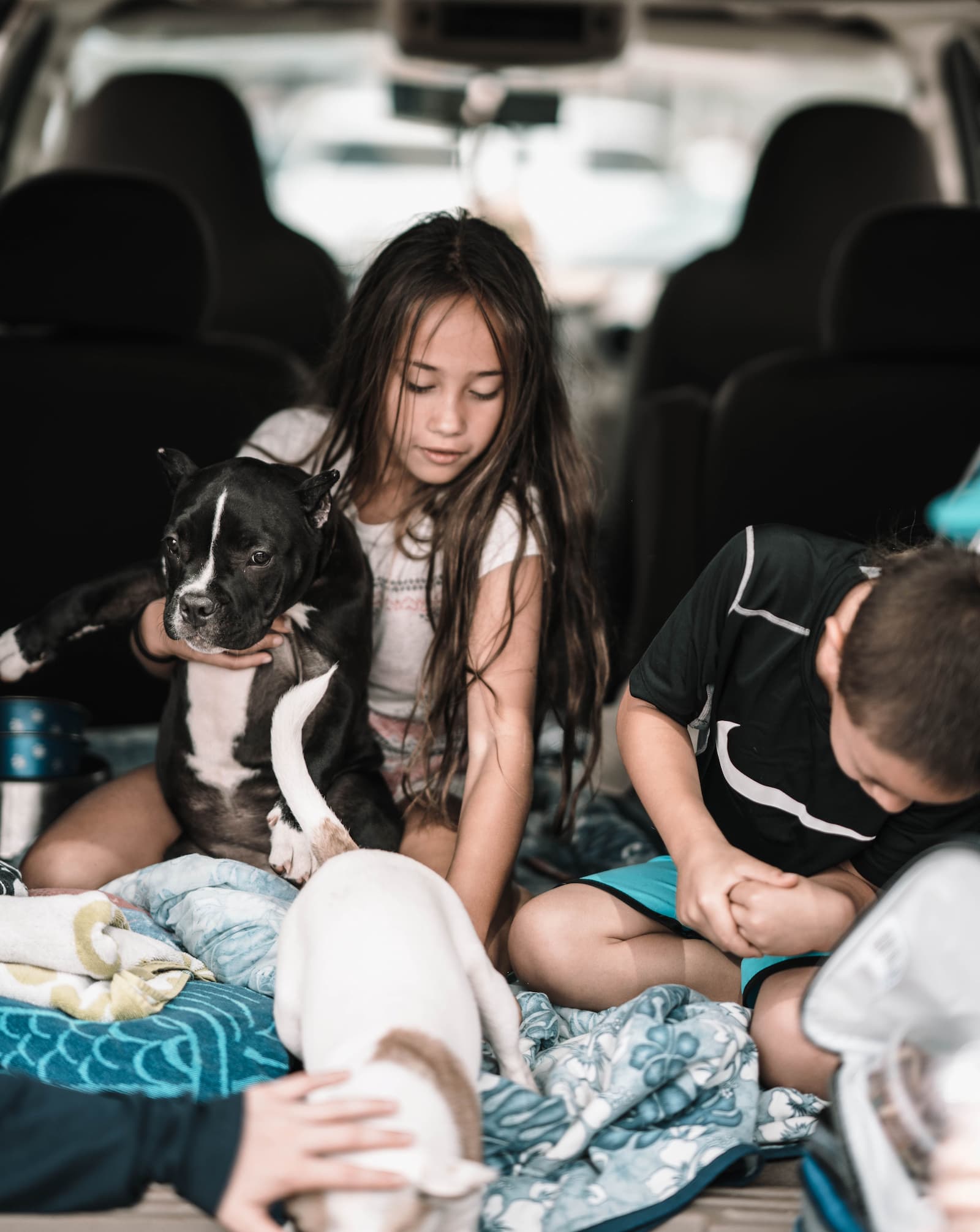
No breed is automatically safe around children without supervision — that part isn't negotiable, regardless of what list a dog appears on. What breed selection actually controls is the margin for error: how a dog tends to react to a grabbed tail, a startling noise, or rough toddler play, and how much size and strength are involved if something does go wrong. Age group changes the calculus more than most lists admit.
Households with toddlers (under 5)
This is the age group where breed choice matters most, because toddlers can't reliably follow "be gentle" instructions and small dogs can be genuinely injured by normal toddler roughness — a fall or a grab that a Labrador shrugs off can hurt a Chihuahua. Two things to prioritize: a sturdy enough size to tolerate accidental roughness, and a naturally patient temperament.
Labrador Retriever
Sturdy, patient, and famously tolerant — the standard recommendation for toddler households for good reason. High energy means real exercise needs, though; see our low-maintenance guide if that's a concern alongside kids.
Golden Retriever
Similar profile to the Labrador — patient, sturdy, eager to please. Higher grooming needs from the double coat are the tradeoff.
Beagle
Compact but solidly built, and generally good-natured with children. Worth knowing before committing: Beagles are among the more vocal breeds, covered in our quietest breeds guide.
Households with older kids (6+)
Once kids can reliably follow instructions and understand a dog's boundaries, the field opens up considerably — smaller and higher-energy breeds become genuinely workable, and the real question shifts to matching the dog's exercise needs to the family's actual activity level.
Boxer
Playful and loyal, genuinely built for active older kids who want a dog that plays back. Needs real daily exercise and early training to manage its size and enthusiasm — see our lifestyle framework for weighing that against your schedule.
Standard Poodle
Highly trainable, low-shedding, and genuinely good with kids old enough to participate in training — a Poodle that gets involved in structured play and basic obedience work with an older child tends to thrive.
Cavalier King Charles Spaniel
Gentle and affectionate at any age of child, though its dislike of being left alone (see our apartment guide) matters more in a busy family household, not less.
Breeds worth extra caution regardless of age
This isn't a "bad breed" list — plenty of families successfully raise kids alongside every breed here. But these are breeds where the margin for error is genuinely smaller, and that's worth knowing rather than discovering.
Small, fragile toy breeds (Chihuahua, Yorkshire Terrier)
The risk runs the other direction from what people expect: it's often the dog getting hurt by an overenthusiastic child, not the reverse. Better suited to families with older, gentler kids than toddlers.
High-prey-drive or high-alert breeds
Breeds bred for guarding or strong prey drive can react unpredictably to sudden child movement or noise. Not a reason to rule them out if you have the experience to train and manage that instinct — a reason to be realistic about the training investment required.
Individual temperament varies more within a breed than the breed averages suggest. If you're adopting, ask the shelter directly how a specific dog has behaved around children they've observed. If you're buying from a breeder, meet the parents. Breed narrows the odds; it doesn't replace direct observation of the actual dog.
Weigh this alongside your space and schedule in the breed match quiz.