Here's the uncomfortable truth behind most "quiet dog breed" lists: the biggest single predictor of how much a dog barks is training and socialization, not breed. A well-socialized Beagle can be reasonably quiet indoors; a poorly socialized Basenji can still make noise, just a different kind. That said, breed does shift the baseline — some dogs were bred for jobs that require vocalizing (herding, guarding, scent-trailing), and that instinct doesn't disappear just because the dog now lives on the fourth floor.
The genuinely low-baseline breeds
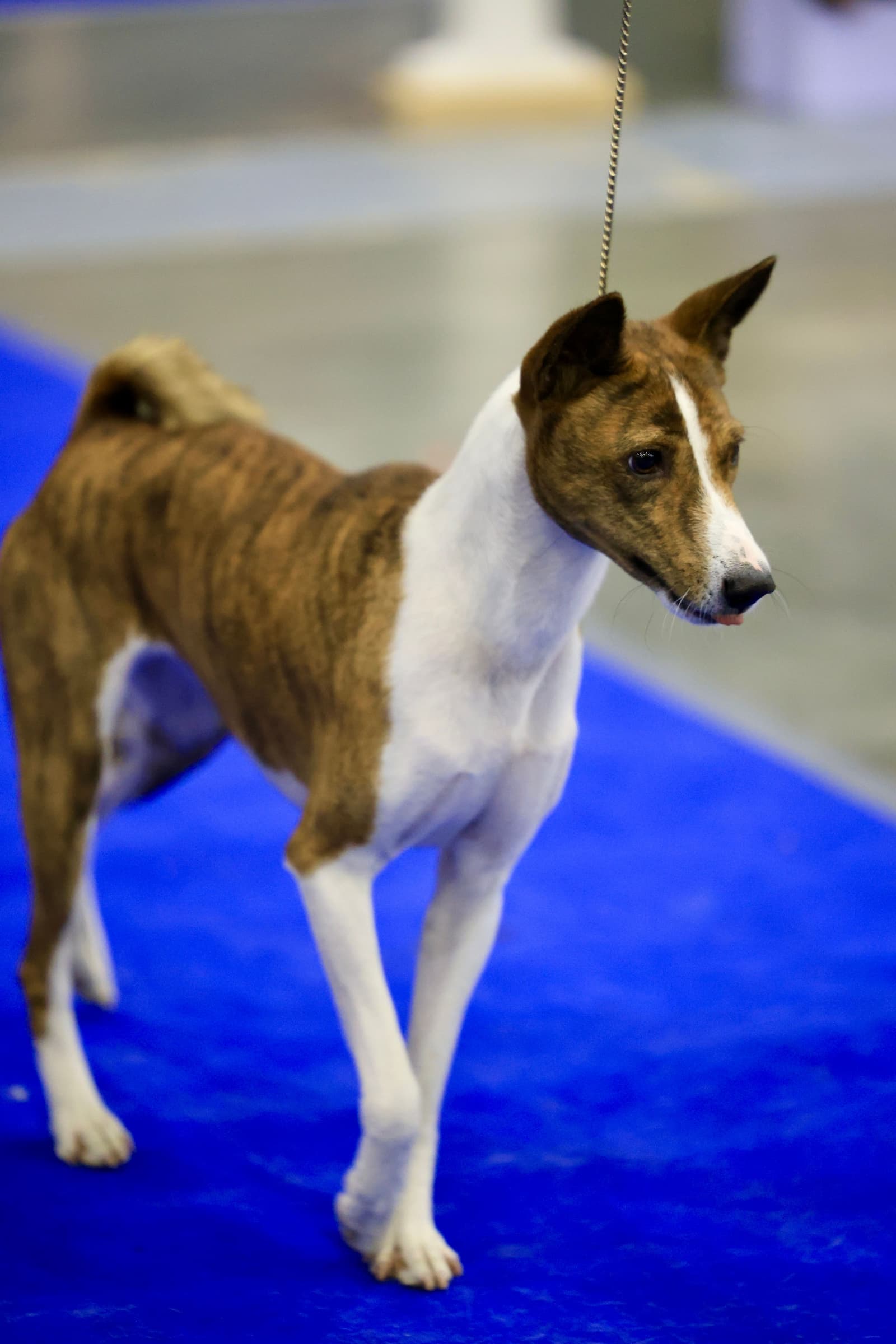
Basenji
Basenjis have an unusually shaped larynx that prevents the typical bark — instead they make a sound often described as a yodel, called a "baroo." It's a real, well-documented breed trait, not a training outcome, which makes this the closest thing to a genuinely low-noise-baseline breed on this list.
Great Dane
Counterintuitively calm indoors, and not a breed prone to nuisance barking. The real apartment obstacle with a Great Dane isn't noise, it's simply fitting a dog this size through doorways and into an elevator — worth a literal measuring-tape check before committing.
Greyhound
Bred for a job (running) that doesn't involve vocalizing, and their low-key indoor temperament generally extends to noise level. See our apartment breeds guide for more on why Greyhounds punch above their size for small-space living.
Bulldog (English)
Not bred for a vocal job, and generally low-energy enough that there's little pent-up energy converting into barking.
Breeds where noise is closer to a job requirement
These aren't "bad" breeds — they're breeds where barking or howling is closer to core wiring than a bad habit, which matters if a noise complaint would actually get you evicted.
Beagle
That baying carries — it's designed to be heard by a hunter a field away. Training reduces it, but doesn't erase the underlying drive the way it can with a breed that has no vocal job history.
Siberian Husky
Pack-communication instinct shows up as howling, especially when left alone. Neighbors don't distinguish between "howling" and "barking" when it's coming through a shared wall at 7am.
Miniature Schnauzer / many terriers
Terrier-type breeds were often bred to alert on vermin and movement, and that alert-barking instinct transfers readily to "someone walked past the door" in an apartment hallway.
Even in higher-bark-drive breeds, a consistent "quiet" command and management of triggers (blocking a view of the hallway, white noise for street sounds) closes most of the gap. If barking is a serious concern, a certified trainer for a handful of sessions is worth more than any breed choice.
Weigh noise sensitivity against your specific building in the breed match quiz — it factors in your schedule too, since a dog left alone longer is more likely to bark from boredom regardless of breed.