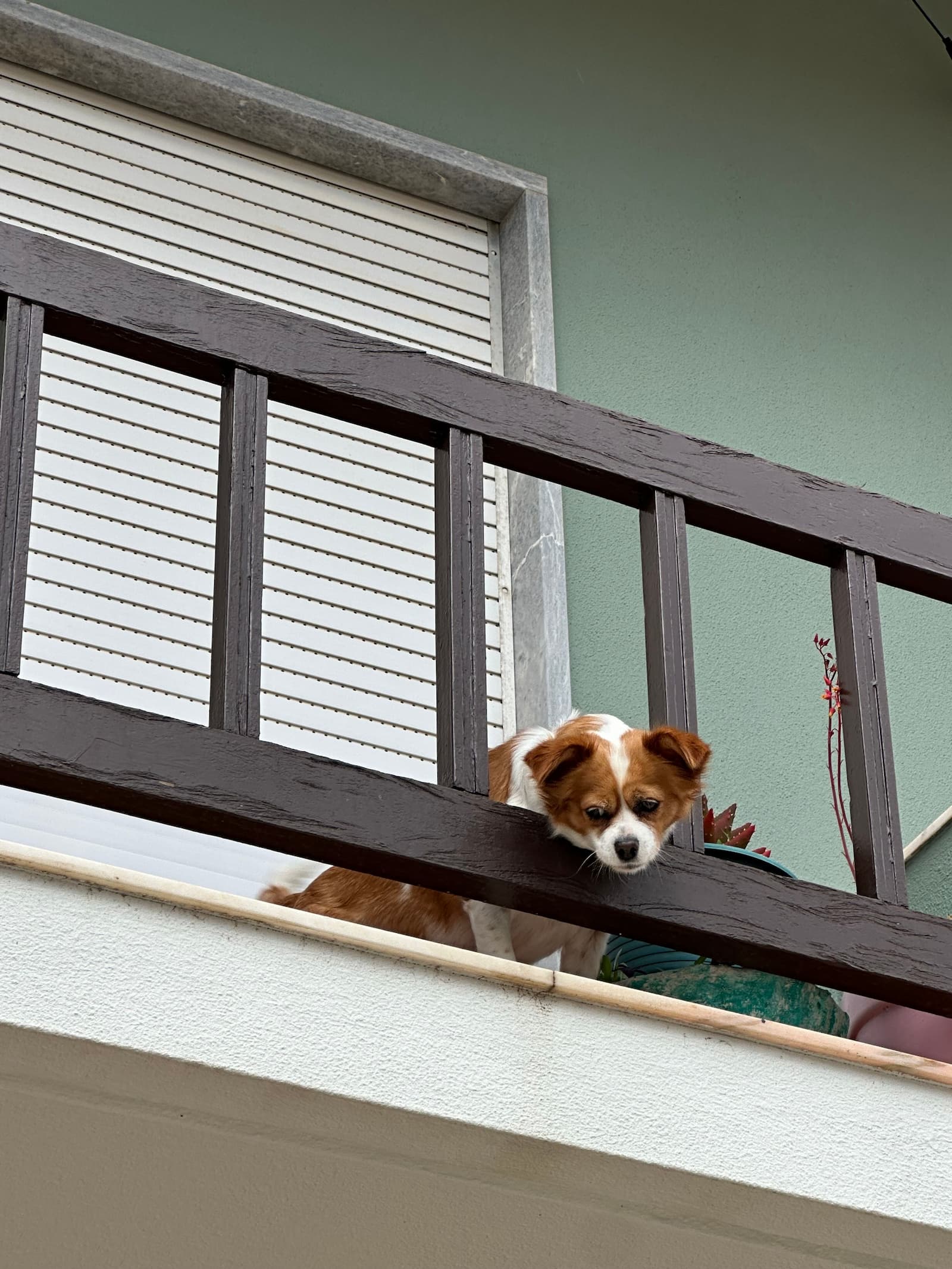
Every apartment-breed list starts the same way: small dogs good, big dogs bad. It's the wrong axis. A Greyhound — 65 to 70 pounds — is a genuinely easier apartment dog than a Jack Russell Terrier a third its size, because a Greyhound is content to lie on the couch for eighteen hours a day and a Jack Russell is not. What actually predicts apartment success is a combination of three things: how much noise the dog tends to make, how much of its energy needs to be burned indoors versus out, and how much space its coat and grooming routine take up in a small bathroom.
Breeds that genuinely work
French Bulldog
The apartment dog most people already picture, and for good reason — short walks satisfy them, the coat needs almost no upkeep, and they're built to be homebodies. The catch is health, not lifestyle fit: their flat faces make them prone to breathing trouble in heat and humidity, so summer walks need to be short and early, and air conditioning isn't optional.
Greyhound
Retired racing Greyhounds are famous in rescue circles for being "45-mph couch potatoes" — short bursts of speed outside, then long stretches of doing absolutely nothing inside. Thin coat means they feel cold easily, so a jacket for winter walks is closer to a requirement than an accessory.
Basenji
Basenjis are physically unable to bark in the way most dogs do — they make a yodel-like sound instead, which is a genuine advantage in a thin-walled building. The tradeoff is temperament: they're independent, sometimes stubborn, and do better with an owner who's handled a strong-willed dog before.
Cavalier King Charles Spaniel
Affectionate, adaptable, and rarely destructive, which makes them forgiving of small spaces. They don't do well left completely alone for long workdays, though — this is a breed that wants to be in the room with you.
Shih Tzu
Low exercise needs and an easygoing temperament suit small spaces well. The long coat is the tradeoff — either commit to daily brushing or budget for a groomer to keep it in a short "puppy cut," because a matted coat in a small apartment is a bad time for everyone.
Chihuahua
Tiny footprint and minimal exercise needs. The honest caveat: Chihuahuas can be more vocal and more prone to anxiety-driven barking than people expect from a small dog, so early socialization and training matter more here than the size would suggest.
A mixed-breed dog from a shelter can outperform every purebred on this list, depending on the individual animal. Shelter staff can usually tell you a specific dog's real energy level and noise habits from direct observation — which beats extrapolating from a breed standard.
Popular picks that are harder than they look
Beagle
Compact and low-maintenance to groom, but bred to bay and howl on a scent trail — a habit that doesn't disappear indoors. Beagles are one of the more likely breeds to trigger a noise complaint in a shared building.
Siberian Husky
Bred to run for miles pulling weight. Without serious daily exercise, huskies get destructive and vocal — "howling," not barking, but audible through walls all the same. This is a house-and-yard breed, not an apartment one, regardless of how well the coat photographs.
What actually matters more than the breed
Two apartments aren't the same. A ground-floor unit backing onto a park is a different proposition than a fifth-floor walk-up with no elevator and no green space within four blocks — the second one adds a real daily tax to every bathroom break. Building construction matters too: a prewar building with plaster walls muffles noise very differently than modern stick-frame construction. If you're not sure how thin your walls actually are, ask a neighbor honestly, before you get a dog, not after.
Not sure where you land? Our breed match quiz weighs space, noise tolerance from your building, and your schedule together rather than ranking breeds by size alone.