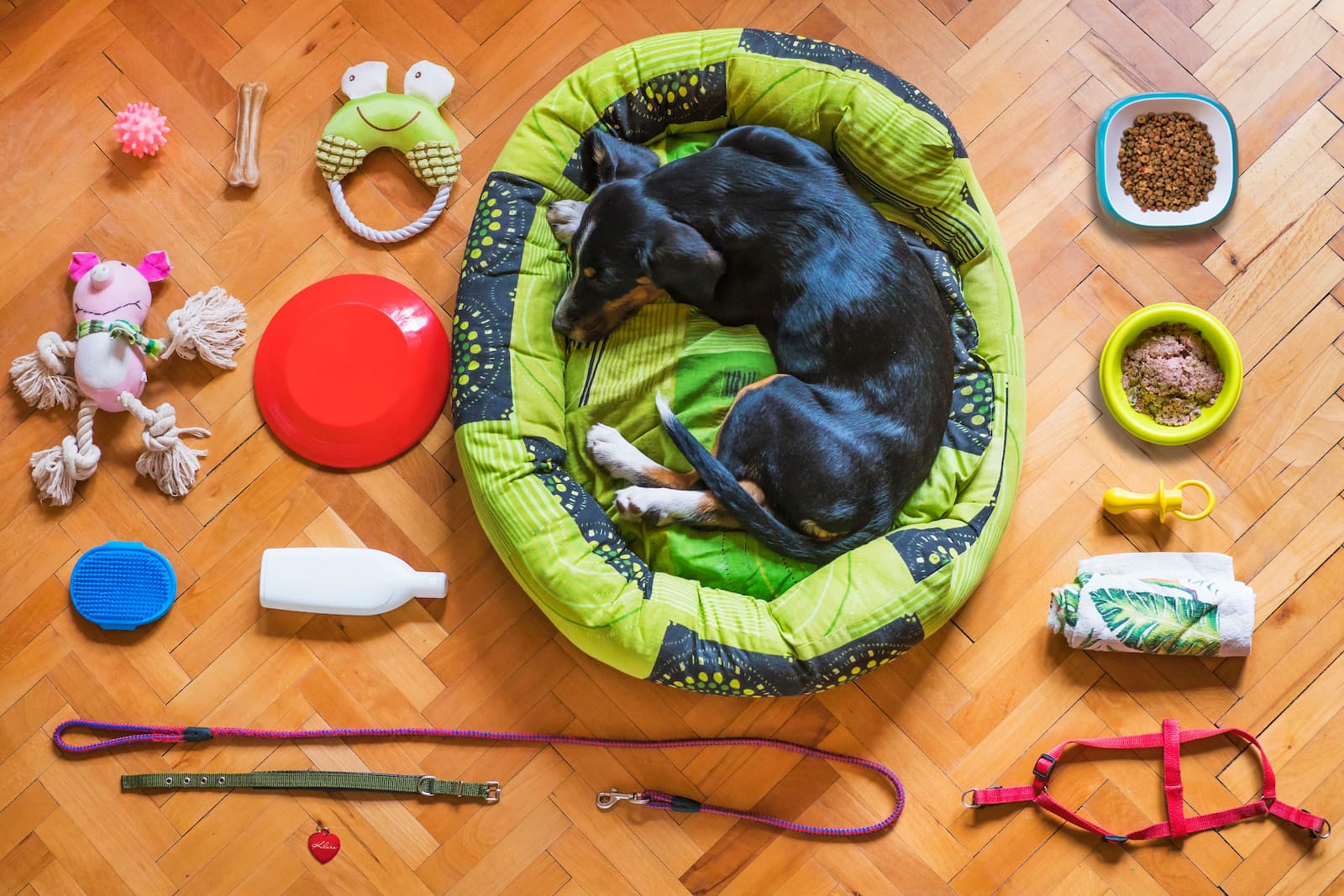
Pet stores are built to make you buy the whole aisle. You don't need most of it in week one. Here's what's genuinely worth having before your dog walks through the door, organized by how urgent it actually is.
Before day one — non-negotiable
Crate, sized for the dog's adult size (with a divider for puppies)
Buy for the adult size up front with a divider panel rather than upgrading crates three times in the first year — it's cheaper long-term and the dog only has to adjust to one crate. [Affiliate link: recommended crate — add your Chewy/Amazon link]
Food and water bowls
Stainless steel over plastic — easier to clean and doesn't harbor bacteria in scratches the way plastic does over time. Raised feeders are worth skipping for puppies; they're only recommended for certain large breeds later in life, and even that's debated among vets.
A well-fitted harness and a 6-foot leash
Skip retractable leashes for a new puppy — they teach pulling and offer far less control in an emergency. A standard flat leash is the right starting point.
ID tag with your phone number
Get this made same-day if possible; a surprising number of new-puppy escapes happen in the first two disoriented weeks in a new home, before the dog has bonded to the property.
Puppy-appropriate food
Ask your breeder or shelter what the dog has been eating and transition gradually over 7–10 days if you're switching brands — a sudden switch is the single most common cause of new-puppy stomach upset.
Pet insurance — enrolled before any symptoms appear
This is the one item on this list with a real deadline: most insurers won't cover a condition that showed symptoms before enrollment, so signing up in the first week, while the dog is healthy, matters more than which specific plan you pick. [Affiliate link: compare pet insurance plans — add your Embrace/Fetch/Pets Best link]
First week — helpful, not urgent
Puppy pads or a designated potty area
Useful for apartment dwellers or during bad weather, but don't rely on them exclusively if your long-term goal is outdoor-only potty training — consistency in the first weeks sets the pattern.
A few training treats, cut small
Pea-sized, not the size on the bag. You'll use a lot of them in the first month, and a dog that's full doesn't stay motivated.
One or two chew toys, matched to the dog's actual chew strength
Buy one, not ten — you'll learn quickly whether your dog is a light chewer or destroys everything in a day, and that tells you what's worth buying more of.
A first vet appointment, booked before pickup day
Book this before the dog even arrives so you're not scrambling in week one. Bring any records from the breeder or shelter.
Worth waiting on
A dog bed
Puppies chew and have accidents. A cheap, washable option for the first few months saves you from destroying a $150 bed before the dog is even fully house-trained.
Grooming tools beyond a basic brush
Wait until you know the adult coat type before investing in breed-specific grooming equipment — a Goldendoodle puppy's coat, for instance, changes significantly as it matures.
A large toy collection
Puppies lose interest in most toys within days. Buy one at a time and see what actually gets used before expanding.
Skip entirely, for most dogs
Puppy strollers, most "calming" chews without a vet's specific recommendation, and matching outfits (fun, not functional) are all things pet retailers will suggest that have nothing to do with a successful first few months.
For the products worth spending more on versus less, our guides on apartment breeds and low-maintenance breeds break down grooming and gear needs by breed specifically.